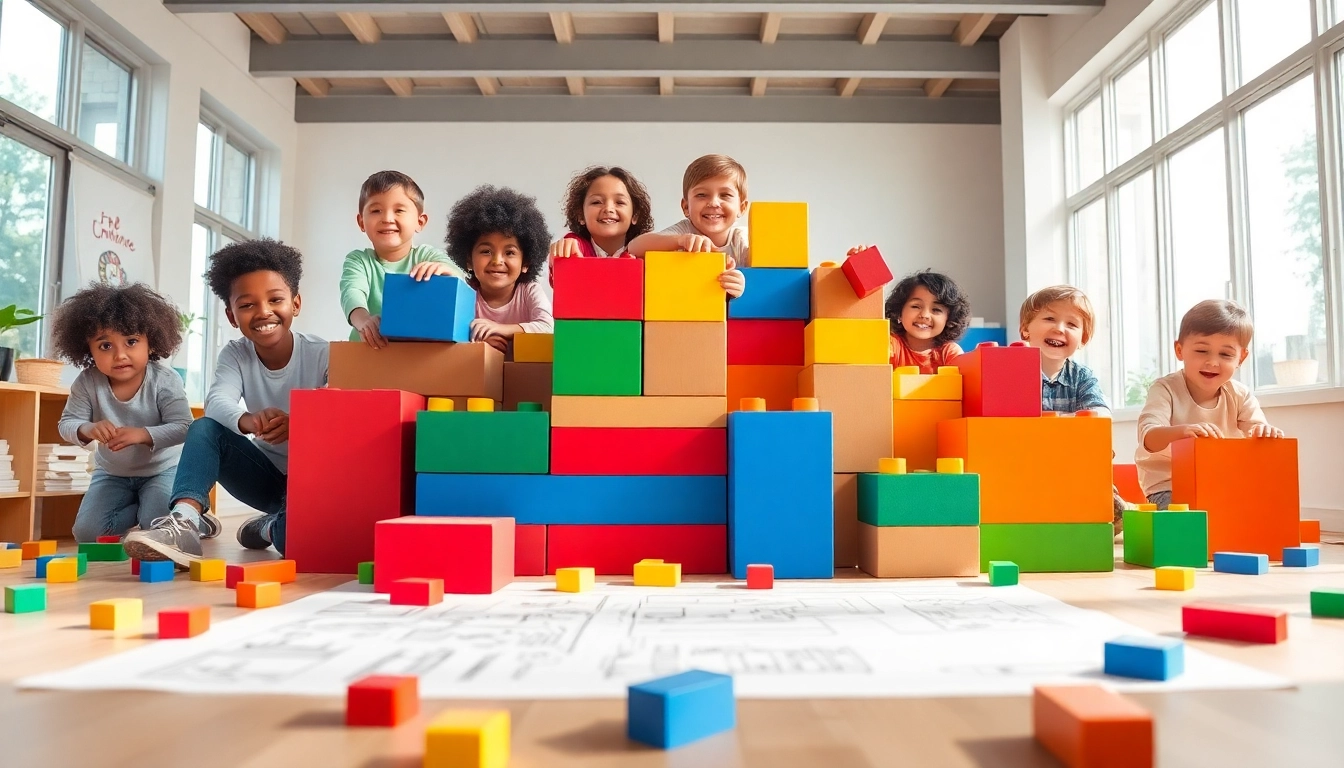
Understanding Giant Building Blocks
What Are Giant Building Blocks?
Giant building blocks are oversized toys, typically made from foam, plastic, or wood, designed to encourage creative play in children. These colorful blocks come in various shapes and sizes, allowing children to stack, balance, and construct a wide range of structures. They provide a tactile experience that is both engaging and educational, fostering creativity and critical thinking. With their large size, they are perfect for both indoor and outdoor play, making them an excellent choice for parents looking to stimulate their child’s imagination. To fully appreciate these toys, discover more about their various uses and benefits.
Benefits for Children's Development
Using giant building blocks has profound benefits for children's development. These blocks promote physical coordination as children learn to lift, carry, and stack them. While playing, they also develop fine and gross motor skills. Beyond that, building blocks enhance cognitive abilities such as problem-solving and spatial reasoning. Children are encouraged to think critically as they figure out how to balance their structures or fit blocks together. Additionally, imaginative play fosters creativity, enabling kids to visualize and create their own worlds. Social skills also benefit as children build together, learning to communicate, share ideas, and collaborate on projects.
Safety Features to Consider
When selecting giant building blocks, safety is paramount. Choose blocks that are made from non-toxic materials, ensuring they are safe if mouthed or chewed by younger children. Soft foam blocks are often suggested for indoor play to minimize the risk of injury. Additionally, look for blocks with rounded edges and no small parts that could pose choking hazards. Regular inspection of the blocks for signs of wear and tear is also essential to maintain safety standards in your play area.
Setting Up for Indoor Play
Creating a Dedicated Play Space
Setting up a dedicated play area for giant building blocks can transform any room into a haven of creativity. Ideally, this space should be free from obstructions and hazards. Use soft mats to cushion the floor, providing a safe landing spot for any blocks that may fall. Design your space with clear boundaries to help children understand where their play area begins and ends. Adding a few comfortable seating arrangements can also encourage collaborative play and creativity. Consider including storage options, such as bins or shelves, to keep blocks organized and easily accessible.
Organizational Tips for Block Storage
Keeping giant building blocks organized can help maintain a tidy play area while ensuring that children can find what they need easily. Use labeled bins or baskets to separate blocks by size, color, or type. This not only helps in maintaining order but also encourages categorization skills among children. Vertical storage solutions can also save space and keep the play area neat and fun. Teaching children to clean up after playtime reinforces responsibility and gives them a sense of ownership over their play space.
Decor Enhancements for Growth Environment
Enhancing the decor of your play space can create an inspiring environment that promotes creativity and exploration. Consider painting the walls in bright colors or adding murals that depict various themes, from outer space to underwater adventures. Incorporate interactive elements such as chalkboard walls or magnetic boards where children can hang their creations. Including comfortable seating areas with cushions or bean bags can also make the space inviting. Remember that a vibrant play area encourages children to express their ideas freely.
Innovative Building Ideas
Themed Construct Projects to Try
Themed building projects can make playtime more engaging and educational. Consider creating themes around popular stories or movies, where children can design settings such as castles, outer space stations, or underwater worlds. For example, a fairy tale theme could involve building a castle, while a Space Adventure could include rocket ships and alien habitats. This not only enhances storytelling skills but also allows children to explore different concepts and cultures through imaginative play. Incorporating real-world scenarios, like building a city, introduces children to basic architectural concepts and community elements.
Collaborative Building Strategies
Encouraging collaborative play enhances social skills and builds teamwork among children. Set up group challenges where children must work together to achieve a common goal, such as creating a large structure that requires input from everyone. Roles can be assigned within the group, such as architect, builder, and designer, allowing each child to contribute creatively. This collaborative approach not only fosters communication skills and cooperation but also enhances problem-solving, as children must negotiate their ideas and reach a consensus on building techniques.
Challenges for Advanced Builders
For children looking for a more challenging play experience, consider setting specific building tasks that encourage critical thinking and creativity. Tasks could include constructing structures that meet specific height or stability requirements or building a bridge strong enough to hold weight. Moreover, you can introduce concepts from civil engineering by incorporating elements like arches and cantilevers into their designs. These challenges help older children develop advanced problem-solving skills while still engaging in playful learning.
Incorporating Educational Elements
STEM Learning Through Play
Integrating STEM (Science, Technology, Engineering, and Mathematics) learning into play with giant building blocks is both fun and educational. Children naturally begin to explore concepts of physics and engineering as they manipulate blocks to create stable structures. You can introduce topics such as gravity, balance, and equilibrium through guided discussions during play. Encourage children to experiment with building techniques and observe the results, fostering a hands-on approach to learning. Simple science experiments, such as testing the strength of different structures, can be accomplished using their building creations as examples.
Creative Storytelling with Blocks
Storytelling and giant building blocks make an excellent combination for imaginative play. Adults can encourage children to create narratives based on the structures they build, leading to interactive story sessions. For instance, after designing a castle, children can create a story that explains its history or the adventures of characters living there. This style of play develops language skills, enhances vocabulary, and ignites creativity while allowing children to express their thoughts and feelings in a safe environment.
Math Concepts Using Building Blocks
Giant building blocks can serve as an effective educational tool for introducing basic math concepts. Children can learn about shapes, symmetry, and volume simply by exploring and arranging blocks creatively. Using blocks to create towers enables children to practice counting as they add more blocks and discuss concepts like addition and subtraction. Introducing measurements, such as size comparison, also helps children grasp fundamentals of geometry and measurement in a playful context. As they engage in play, they utilize mathematical concepts practically, reinforcing their problem-solving capabilities.
Frequently Asked Questions
How do giant building blocks promote learning?
Giant building blocks enhance spatial awareness, problem-solving skills, and creativity by allowing children to experiment with balance and structure.
What age group is best suited for giant building blocks?
Giant building blocks are suitable for children ages 2 and up, as they encourage open-ended play and imagination.
Are the blocks safe for indoor use?
Yes, most giant building blocks are made from soft materials, ensuring they are safe for indoor play without causing injury.
How can I encourage teamwork with building blocks?
Set collaborative challenges, such as building a tower together, to foster teamwork and communication skills among children.
What cleaning and maintenance practices are recommended?
Regularly wipe down blocks with mild soap and water. Store them in a dry area to prevent mold and maintain hygiene.